
Usually visitors to the Caribbean walk right past one of the most traveled fruits in the entire world — blushing red on a roadside tree, or piled high in a local market — without ever realizing they were looking at something that began its journey thousands of miles away and carries a different name on almost every island it calls home.
Let me introduce you properly. The fruit in question is Syzygium malaccense — the Malay Apple. Scientifically speaking, it is a species of flowering tree whose exact origin points most likely to the rainforests of Malaysia, Java, and Sumatra. But this is no stay-at-home plant. Carried by the Austronesian people when they traveled to new islands as a "canoe plant" — one of the precious few species they brought with them wherever they sailed — it is now cultivated and naturalized in tropical countries from the Pacific Islands to the Atlantic coast of South America.
The fruit is oblong, waxy, and deeply red (sometimes pink or white), roughly the size of a small pear. Bite into it and you find crisp white flesh, mildly sweet with floral notes, faintly refreshing like a cross between an apple and a cucumber. What it lacks in intense sweetness it more than makes up for in character, in culture, and above all — in names.
"Every name this fruit carries is a passport stamp — the record of a journey that no other tropical fruit can quite match."
Where it all began
The tree is native to what botanists call the Indo-Malayan region — Malaysia, Indonesia (Sumatra and Java), Vietnam, Thailand, and extending through New Guinea to northern Australia. From there, the Austronesian peoples spread it deliberately across Oceania as one of their essential "canoe plants," the living cargo they carried to sustain new settlements. In modern times, colonial trade routes and botanical gardens carried it further still — into the Caribbean, Latin America, Africa, and beyond.
The Caribbean Islands — and What It's Called Where
The thing that strikes visitors is how differently islanders speak about the same fruit. What a Jamaican tour guide calls by one name, a hostess in Martinique will call something entirely different.
Trinidad & Tobago
Pomerac
This is the name closest to the French original. In Trinidad and Tobago, the pomerac is woven into the culture as completely as doubles or Carnival. You will find it made into juice, jam, and the irresistible pomerac chow — the fruit cut up and seasoned with pepper, salt, shadow beni, and lime — sold from roadside stalls. The name derives from the French pomme Malac, meaning "Malaysian apple," a linguistic relic of French colonial presence in the Caribbean. Every Trinidadian has a memory attached to this fruit. Tags: Pomerac Pommerac
Jamaica
Otaheite Apple / Jamaican Apple
Jamaica received the Malay Apple in 1793 — brought from the Society Islands (Tahiti was then called Otaheite by Europeans, hence the name). Jamaicans call it the Otaheite Apple or simply the Jamaican Apple, and the variety developed here has become something of a local legend. The 'Kingston' cultivar, originating from Jamaica, produces dark-red fruits that can weigh over a pound — extraordinarily large for this species — and is prized for its superior eating quality. In Jamaica the fruit is also used to make wine, a tradition that speaks to how deeply it has been adopted into island culture. Tags: Otaheite Apple Jamaican Apple
Barbados
Golden Apple
Barbadians have their own affectionate name for it — golden apple — and have made it the base of a beloved golden apple juice that visitors are strongly encouraged to try. It is more than just a beverage; it is described as a genuine cultural experience, with a flavor that is subtly sweet and mildly tart, embodying the spirit of the island in every sip. Do not confuse this with the unrelated golden apple fruit (Spondias); in Barbados, this name firmly belongs to the Malay Apple. Tags: Golden Apple
Guadeloupe & Martinique (French Antilles)
Pomme Malacca / Malaka
The French-speaking islands retain the most direct linguistic connection to the fruit's geography. In Guadeloupe, locals call it pomme malacca or simply malaka — an open homage to Malacca, the Malaysian city for which the tree is named. In Martinique, the same tradition holds. The tree arrived in the Lesser Antilles during the 19th century, spreading from Jamaica, and took firm root in the Francophone islands where it is eaten fresh and admired as one of the most visually beautiful trees of the Myrtaceae family — its fuchsia flowers described as small pom-poms or bright fireworks against tropical green. Tags: Pomme Malacca Malaka Jambose Rouge
Puerto Rico | St. Vincent and the Grenadines
Pomarrosa / Plum Rose
Puerto Ricans know it as pomarrosa — literally "rose apple" in Spanish — and the island has a notable tradition of making wine from the fruit. The pomarrosa appears at local markets and in home gardens, and the name is understood across the Spanish-speaking Caribbean and Latin America. In St. Vincent and the Grenadines, a windward island, it is also widely called plum rose. Tags: Pomarrosa Plum Rose
Dominican Republic & Cuba
Pomarrosa / Manzana de Agua
Across Hispaniola and Cuba, the Spanish tradition of calling it pomarrosa prevails, though manzana de agua — water apple — is also heard, a name shared with neighbors in Central America. The fruit grows throughout both islands and is found in local markets alongside more commercially familiar tropical fruits. Tags: Pomarrosa Manzana de Agua
St. Lucia, Grenada & the Windward Islands
Rose Apple / Pommerac
The Windward Islands, with their mix of English and French Creole heritage, tend to use both "rose apple" and "pommerac" interchangeably — a reflection of their layered colonial history. In St. Lucia and Grenada, where French and English cultures have long overlapped, you may hear either name depending on which village you are in and which generation is doing the talking. The fruit is common in kitchen gardens and hedgerows throughout these islands. Tags: Rose Apple Pommerac
Suriname & Guyana
Mountain Apple / Water Apple
In the Guianas, "mountain apple" is common, as is "water apple" — names reflecting English colonial heritage. Guyana has its own culinary tradition with the fruit: the dark-red skin is cooked down to make a sweet syrup, demonstrating how deeply practical Caribbean cooks can be with a fruit that elsewhere might be eaten only fresh off the tree. Tags: Mountain Apple Water Apple
Haiti
Pomme d'Amour
Haiti offers perhaps the most poetic name of all — pomme d'amour, or "love apple." It is a name with a gentle, almost mythological warmth, and it perfectly captures the way this fruit is regarded throughout the Caribbean: not as a commodity, but as something personal, something tied to memory and place and feeling. The Haitian name is heard also in French Guiana, where the same romantic designation has taken hold. Tags: Pomme d'Amour
The Pacific & Southeast Asia - Where the Journey Began
To truly appreciate this fruit's story, you must follow it back along the canoe routes of the Austronesian peoples — east across the Pacific, all the way to Hawaii.
Hawaii, USA
'Ōhi'a 'ai & Mountain Apple
The Polynesians brought this tree to the Hawaiian Islands between 1,000 and 1,700 years ago. Hawaiians called it 'ōhi'a 'ai — a name that carries deep cultural and spiritual weight. It provided fruit, wood for carving, offerings, and decoration. Today it is also known as mountain apple, and the fruit is eaten fresh, as it would have been by the original voyagers who carried it across the ocean.
Malaysia & Indonesia
Jambu Merah & Jambu Bol
At its origin, the fruit is known in Malaysian as jambu merah — "red guava" — and in Indonesian as jambu bol, meaning "ball guava." In Indonesia, the flowers of the tree are eaten in salads, a culinary use not found elsewhere, and one that reflects how comprehensively this plant has been integrated into the culture of its homeland.
Marquesas Islands
Kehi'a
Among the Marquesan people of French Polynesia, the fruit is known as kehi'a — a name that traces the Austronesian migration route across the Pacific and provides linguistic evidence of just how ancient the relationship between this people and this plant truly is.
Micronesia / Pohnpei
Apel en Pohnpei
On the island of Pohnpei in Micronesia, the tree is called apel en Pohnpei — literally "the apple of Pohnpei" — a name that speaks to how thoroughly the Polynesians and Micronesians adopted it as their own, giving it the status of a native fruit even though it was deliberately introduced by seafaring ancestors.
Philippines
Malay Apple
The Philippines, sharing Southeast Asian roots with the tree's homeland, knows it as the Malay Apple — a name that acknowledges the fruit's origins while distinguishing it from related species. A large-fruited sweet variety was introduced from Hawaii to the Philippines in 1922, demonstrating that even within the fruit's distribution range, cultivar exchanges continue to this day.
Sri Lanka & India
Malay Apple
In South Asia, where the tree was introduced from Southeast Asia, it is broadly known as Malay Apple, a name that preserves the geographical memory of its origins. The tree grows in Sri Lanka and in the northeastern regions of India, where it has been incorporated into gardens and homesteads for generations.
The Americas - Beyond the Caribbean
Costa Rica & Central America
Manzana de Agua
Costa Ricans and much of Central America call it manzana de agua — water apple — a name that nods to the fruit's high moisture content and crisp, refreshing flesh. The tree grows throughout the region and is found in both home gardens and secondary forests.
Venezuela & Colombia
Pomarrosa
The Spanish-language pomarrosa follows the fruit through Venezuela and into Colombia. In Venezuela it appears in local markets and is included in regional food plant databases as a culturally recognized species. The name unites the Spanish-speaking tropics of the Americas under a single designation.
French Guiana
Pomme d'Amour
Sharing Haiti's romantic name, French Guiana calls it pomme d'amour — love apple. The French Guianese connection to the Caribbean Francophone world is evident in this shared poetic designation, even though French Guiana sits on the South American mainland.
Pacific Islands - Across Oceania
Samoa & Tonga
Mountain Apple
Throughout Polynesia, "mountain apple" is the common English-language name, though local Polynesian names vary by island group. The fruit has been part of Pacific Island life since the original Austronesian settlement, making it one of the oldest introduced food plants in the region.
Fiji & Vanuatu
Malay Apple
Fiji and Vanuatu know it as the Malay Apple, maintaining the English name that traces its heritage to Malaysia. In Vanuatu, native fruit flies are known to attack the tree — one of the very few pests to target it, since it is otherwise remarkably resistant to disease throughout its global range.
"You can chart the movement of entire civilizations simply by tracking what this fruit is called and where."
A Traveler's Checklist
For the adventurous traveler, here is a quick reference — the fruit by name and island, so you know exactly what to ask for at the market:
Trinidad & Tobago → Pomerac
Jamaica → Otaheite Apple
Barbados → Golden Apple
Haiti → Pomme d'Amour
Guadeloupe → Pomme Malacca / Malaka
Martinique → Pomme Malacca
Puerto Rico → Pomarrosa
St. Vincent & the Grenadines → Plum Rose
Dominican Republic / Cuba → Pomarrosa
Grenada / St. Lucia → Rose Apple / Pommerac
Guyana / Suriname → Mountain Apple
Hawaii → 'Ōhi'a 'ai / Mountain Apple
Malaysia → Jambu Merah
Indonesia → Jambu Bol
Marquesas → Kehi'a
Micronesia → Apel en Pohnpei
Costa Rica / Central America → Manzana de Agua
Venezuela / Colombia → Pomarrosa
French Guiana → Pomme d'Amour
Philippines / Sri Lanka / India → Malay Apple
The next time you are wandering a Caribbean market and spot a glistening dark-red fruit piled in a basket near the entrance, pick one up. Ask the vendor what it is called here. Listen carefully. Then think about the Austronesian sailor who packed a seedling into a canoe a thousand years ago, the botanist who catalogued it in Malaysia, the plantation gardener in Jamaica in 1793, the Trinidadian grandmother pressing it into chow, the Hawaiian elder who knows it by a name older than any European presence in the Pacific.
You are not just holding a fruit. You are holding a map.
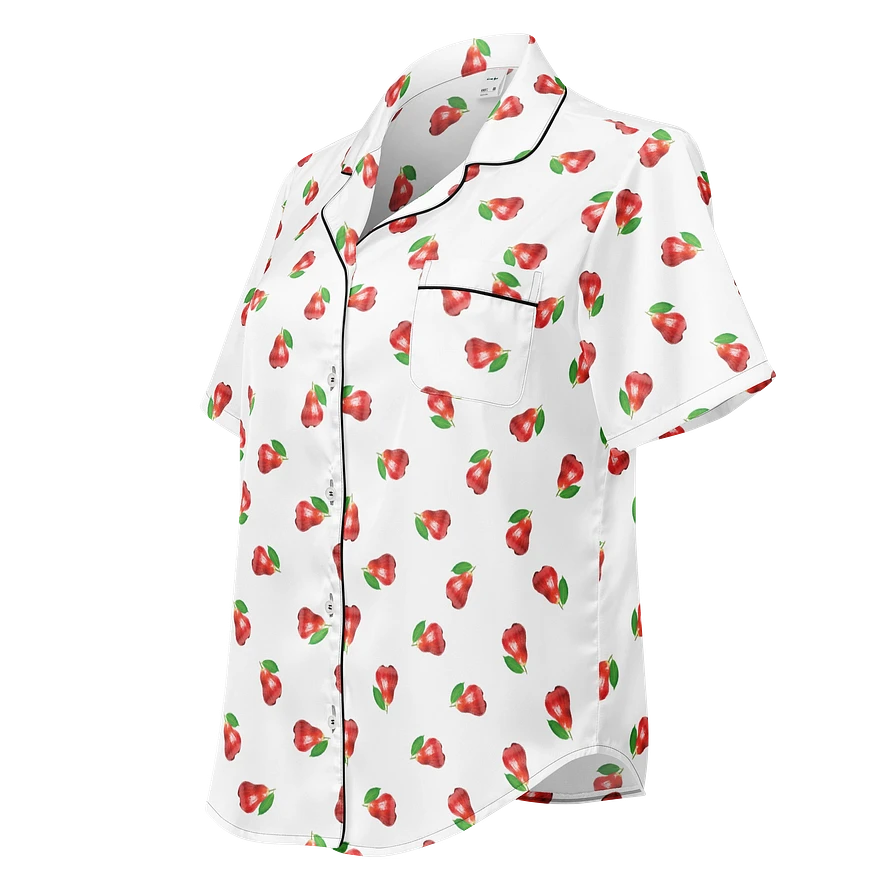
SHOP CaribbeanApples.com
— CaribbeanApples.com