St. Lucia
Hewanorra - Known as today: Helen of the West Indies - National dish: Green Fig and Saltfish
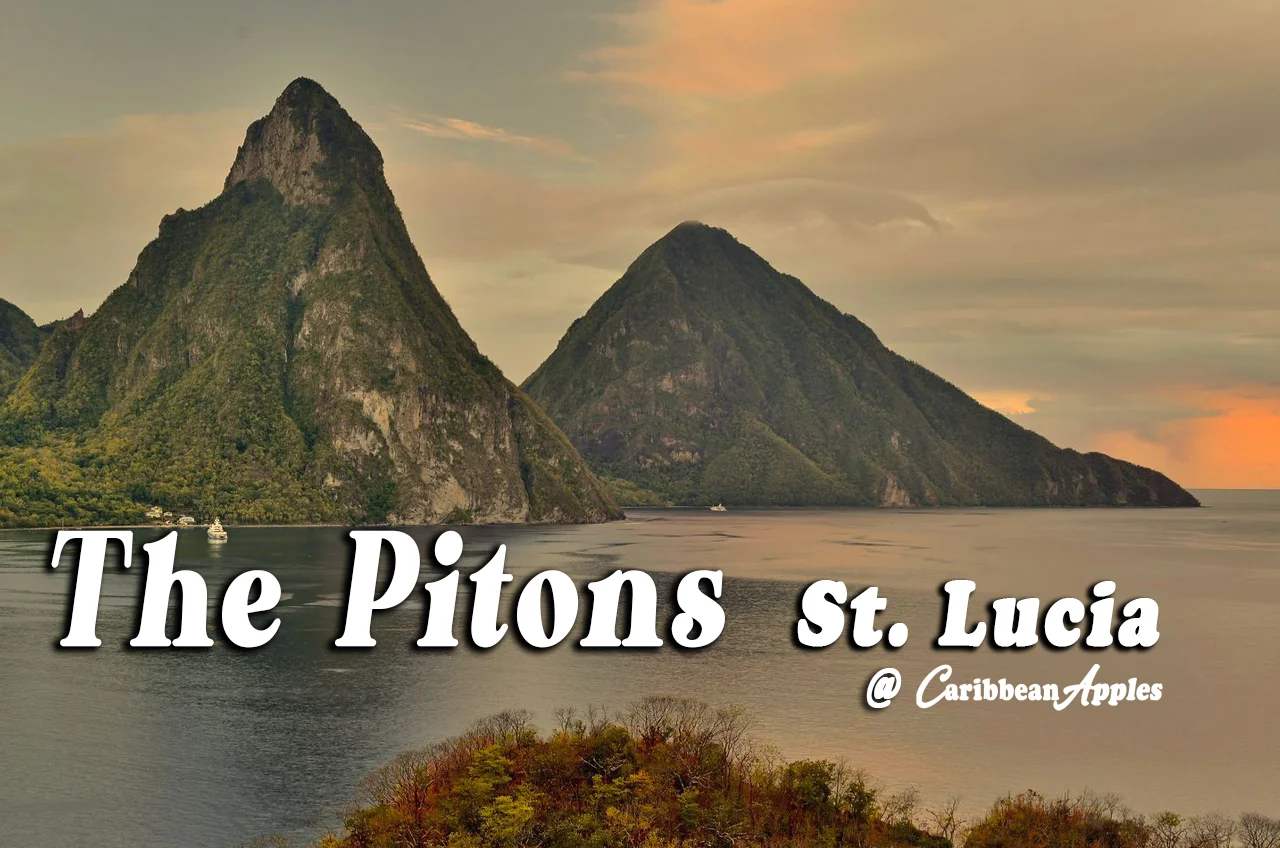
"The Pitons at sunrise. Everything else is almost secondary."
🕐 When to visit
January to April is peak season and the driest. The Saint Lucia Jazz Festival (typically May) is one of the Caribbean's best music events and coincides with shoulder season prices. June to November is rainy season but also the cheapest and most lush.
🍽 What to eat
Green fig and saltfish — the national dish; fig here means green banana Bouyon — a hearty Creole soup with dumplings, ground provisions, and whatever the cook feels like Grilled dorado (mahi-mahi) — absolutely everywhere, always fresh Cocoa tea — rich, spiced hot chocolate made from local cacao; order it everywhere
📍 Local food spots
The Coal Pot (Castries) — historic waterfront restaurant, the island's most beloved; book ahead Naked Fisherman (Cap Estate) — stunning cliff-top bar/restaurant, fresh catch, sunset view included Friday Night Fish Fry (Anse La Raye) — the real one; the whole village transforms into an outdoor feast every Friday
🏖 Best beaches
Sugar Beach (Jalousie Bay) — between the Pitons; the most dramatic beach setting in the Caribbean Reduit Beach (Rodney Bay) — golden sand, calm water, best facilities on island Smuggler's Cove (Cap Estate) — intimate, clifftop-access, gorgeous sunsets Anse Cochon — hidden west-coast cove, exceptional snorkeling
✦ Hidden gems
Anse Galet Beach — dark sand, completely undeveloped, reached via dirt road; you may have it to yourself entirely on a weekday Sulphur Springs — the "world's only drive-in volcano"; the mud baths are free and the sulfur pools are genuinely therapeutic Laborie village — a quiet fishing town where the beach, the bay, and the local life operate completely outside the tourist economy
Travel Bit
Don't stay only in the north near Rodney Bay. The south — Soufrière, the Pitons, the mud baths — is what makes Saint Lucia unforgettable. Rent a car for at least one day.
Find the best accommodations in St. Lucia
Zoom In To Map For Best Deals - Shop this island's collection
Standing Between Giants - St. Lucia: the Pitons
History
Before the Maps, the Pitons Were Already Here
The Pitons are not conventional volcanoes. They are lava domes — thick plugs of magma that pushed upward through the earth's crust and hardened in place millions of years ago, never erupting, never collapsing. The same tectonic forces that built them are still at work: fifteen minutes from where I park my truck every morning, a volcanic caldera bubbles and hisses at the surface. Arawak and Kalinago peoples lived beneath these peaks long before any European arrived. The Kalinago called the island Hewanorra. France and Britain eventually fought over it fourteen times — an almost absurd number — before Britain prevailed in 1814. Through every colonial war and shift of flag, the mountains stood still. When St. Lucia gained independence in 1979, the Pitons went straight onto the national coat of arms. No one argued about that.
Geography
Two Peaks, One World Heritage Site
Gros Piton (770m) is the wider, more approachable of the two — the elder at the head of the table. Petit Piton (743m) is sharper and more vertical, its walls near-sheer in places, rising almost directly from the Caribbean Sea. Despite its name, it is not the easier climb. Its upper faces require technical equipment and restricted permits; most visitors appreciate it from a boat. Together they anchor the Pitons Management Area, a UNESCO World Heritage Site since 2004 that extends both inland and underwater. Volcanic vents on the seafloor heat the surrounding reef, creating a marine ecosystem unlike anything else in the Caribbean. The soil on the lower slopes, enriched by centuries of volcanic decomposition, grows cocoa, breadfruit, and mango without much encouragement from anyone.
Culture
What the Mountains Made of the People
St. Lucian culture is the sound of several worlds finding a way to coexist. The Kwéyòl language carries French grammar shaped by African phonetics and Caribbean experience. About seventy percent of the population speaks it alongside English. The food follows the same logic: green figs and saltfish (Lucia's national dish), callaloo soup thick with dasheen leaves, breadfruit roasted over coal. Every October, Jounen Kwéyòl fills the streets of Soufrière with madras fabric, quadrille dancing, and bélé drumming celebrating culture.
Tourism
What to Do When You Arrive
The first thing every visitor stepping off the boat in Soufrière should do is put their phone away and look up. That first view of both peaks above the harbor is one people describe for years. To hike Gros Piton, register at the Nature Trail office and take a certified local guide — not bureaucracy, just sense. The trail takes three to four hours round trip. Start before 8am, bring more water than you think you need, and wear shoes with grip. The summit view on a clear day stretches to neighboring islands. Below the surface, the marine park offers some of the Caribbean's finest diving: coral walls, sea turtles, seahorses, and visibility that can stretch thirty meters. And for the single best experience — charter a small boat at sunset and watch the light change on the Pitons from the water. At about half past five, both peaks go from deep green to copper to silhouette. You can watch it hundreds of times and not tired of it once.
5 Things Worth Knowing About the Pitons
01 - They Are Lava Domes, Not Cones
The Pitons formed as magma that pushed upward and hardened without erupting — a geological structure called a lava dome. The volcanic system beneath them is still active, which is why a drive-in caldera with boiling mud pools sits just fifteen minutes away.
02 - The Flag Shows the Pitons
The two triangles on St. Lucia's national flag are a direct representation of the peaks. When the flag was designed ahead of independence, no other symbol was seriously considered.
03 - UNESCO Protection Extends Underwater
The World Heritage designation covers both the mountain slopes and the marine park below, making it one of the few sites where the protected area crosses from land into sea.
04 - A Bird Lives Here That Exists Nowhere Else
The St. Lucia parrot — the Jacquot in Kwéyòl — is found only on this island. Conservation efforts beginning in the 1970s brought it back from near-extinction. Hearing one in the trees on the Gros Piton trail stops hikers mid-step.
05 - Petit Piton Cannot Be Casually Hiked
Its upper faces are near-vertical and off-limits to general visitors. The best view of Petit Piton is from the water — a boat trip reveals its full shape rising straight from the Caribbean Sea in a way no photograph fully captures.
At the top of Gros Piton, quiet, looking out at the sea, standing on a volcano that never exploded. Breathe, take it in. It has been there for millions of years and will likely be there for a million more.
CaribbeanApples.com